




Thailand, which celebrates its national identity with a few principal social institutions, is now facing one of its biggest challenges in modern times. Recent scandals involving monks in illicit affairs and taking part in nationwide financial corruption have shaken the integrity of one of Thailand’s major institutions. The monkhood is now being called into question.
The religious institution, one of the three core identities of Thailand, has been hit by unending scandals. The public now questions the institution's very core ideology. How can they claim to promote moral virtue but be so often summoned in courthouses and police stations? As public trust in the religious institution declines, this mistrust is spreading to other pillars of Thai society. If disparaging skepticism is placed upon all of the Thai moral and virtue institutions, what then can hold Thai society together, as it once did in the past?
Scandals in Temples
In recent months, the Thai media has been flooded with scandals involving monks in corruption, money laundering, and even being involved in affairs with women. These scandals are undermining the public’s trust in the monks on a scale never seen before. Thai law, particularly Section 206 of the Criminal Code, enforces strict measures to protect the rights of religious institutions. From the public’s perception, this protection sounds more like censorship of criticism rather than reform.
One of the few scandals that has dominated the Thai public’s discussion is the case of the Wat Phra Dhammakaya temple, which has been facing allegations of financial corruption and its cult-like practices. Since the moment the scandal broke out, more people have been calling for reform and stronger oversight of religious institutions.
The Spreading Wildfire of Mistrust
The deepening crisis of trust among the Thai public is not only a concern for religious institutions but also extends to other core institutions of Thai society, including its sovereignty. In the last two decades, powerful political institutions in Thailand have been questioned by the younger generation of Thais. This is evident in the midterm change of premiership, allegations of unfair elections, and the almost constant change of the constitution, resulting in more than 22 coups since 1932.
A study shows that the public trust towards these institutions has significantly decreased after the 2019 and 2023 elections. The 2020 youth protest signaled demand for transparency, accountability, and reform from core institutions in Thailand.
Theoretical Point of View: Virtue and Power
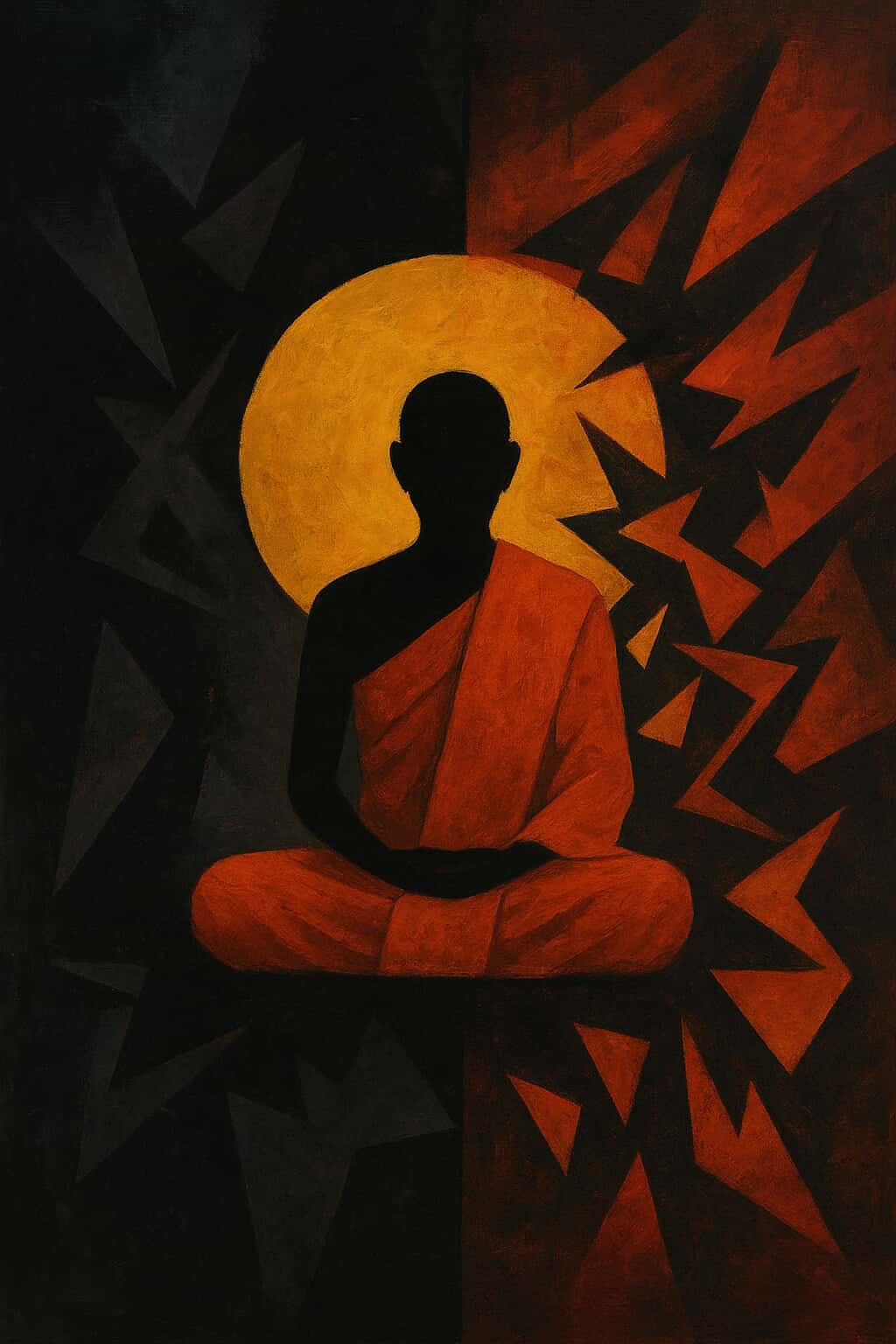
Max Weber, a German sociologist, once said that the legitimacy of power comes in three forms: traditional, charismatic, and legal-rational. In the case of Thailand, society is undoubtedly upheld by the traditional regime of power through the sovereignty of the state, as well as the legal-rational power of the constitution as the state's supreme law. However, once the legitimacy erodes, the tradition loses its power, and the rule of law is disrespected. The mistrust of the public will further grow, just like an uncontrollable wildfire spreading through a dry forest.
The Test of Legitimacy
Thailand now faces a dilemma: when the trust in core institutions erodes, the nation is forced to face a crisis. A national identity crisis. If no reform is made and no transparency is established, this gap of legitimacy may lead to a grave event. Violence might be induced, interventions might be an excuse, and chaos might subsequently be abused down the line.
Scandals involving religious institutions are not just incidents that happened to make the headlines, but warning signs that Thailand’s core institutions are hanging on a precipice. The question that the Thai public should ask now is “Who can we trust?”