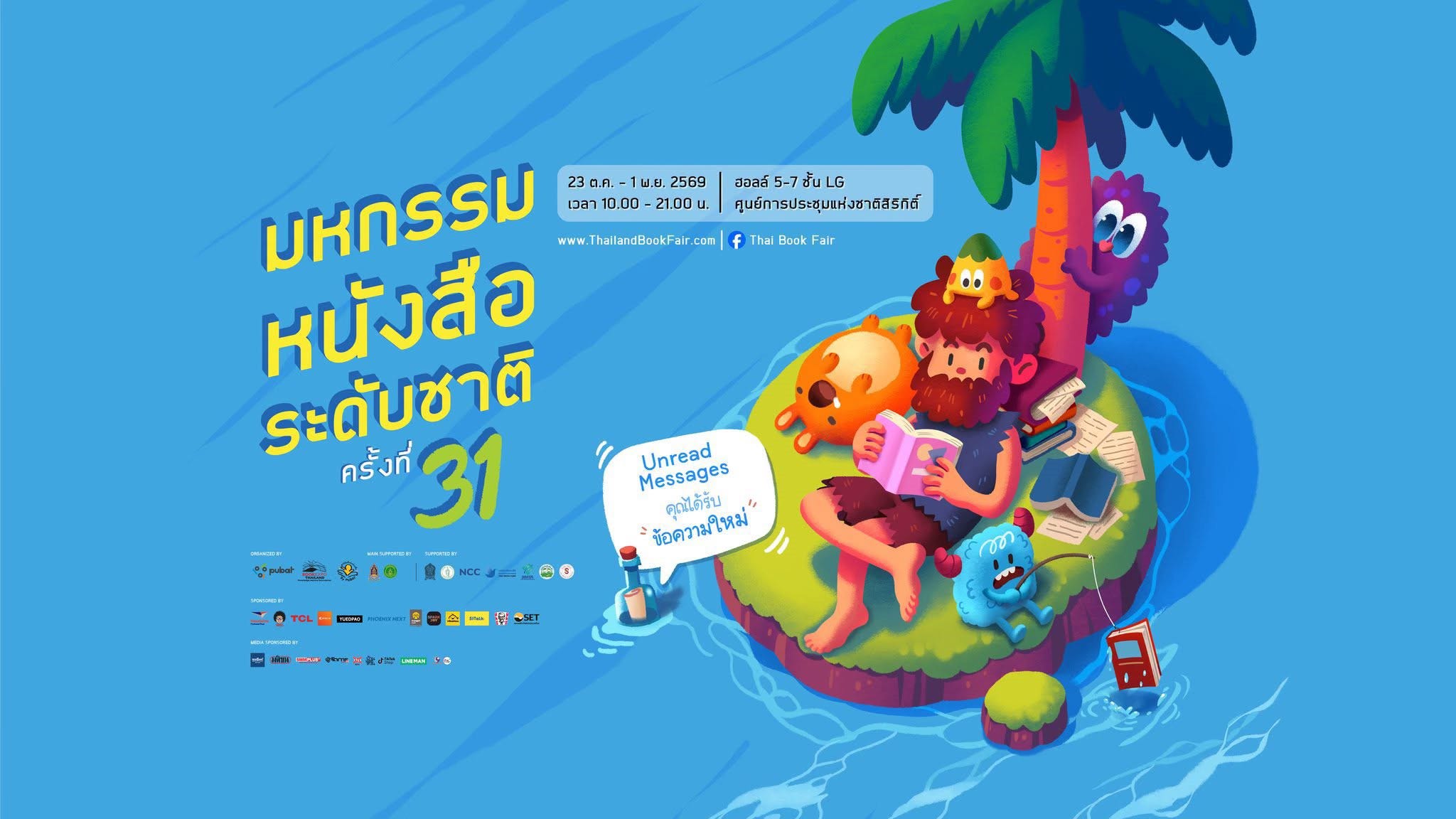





Inside the 31st National Book Expo at Queen Sirikit National Convention Center, a hum can be heard noticeably louder towards Hall 5. Tracing the origin of the sound, and soon enough, you start to notice that the sound originates from the corner of the exhibition floor, dedicated to Boys’ Love (Yaoi) and Girls’ Love (Yuri) literature. There, commerce of these printed materials moves at a pace that defies gravity — literally, no metaphor intended.
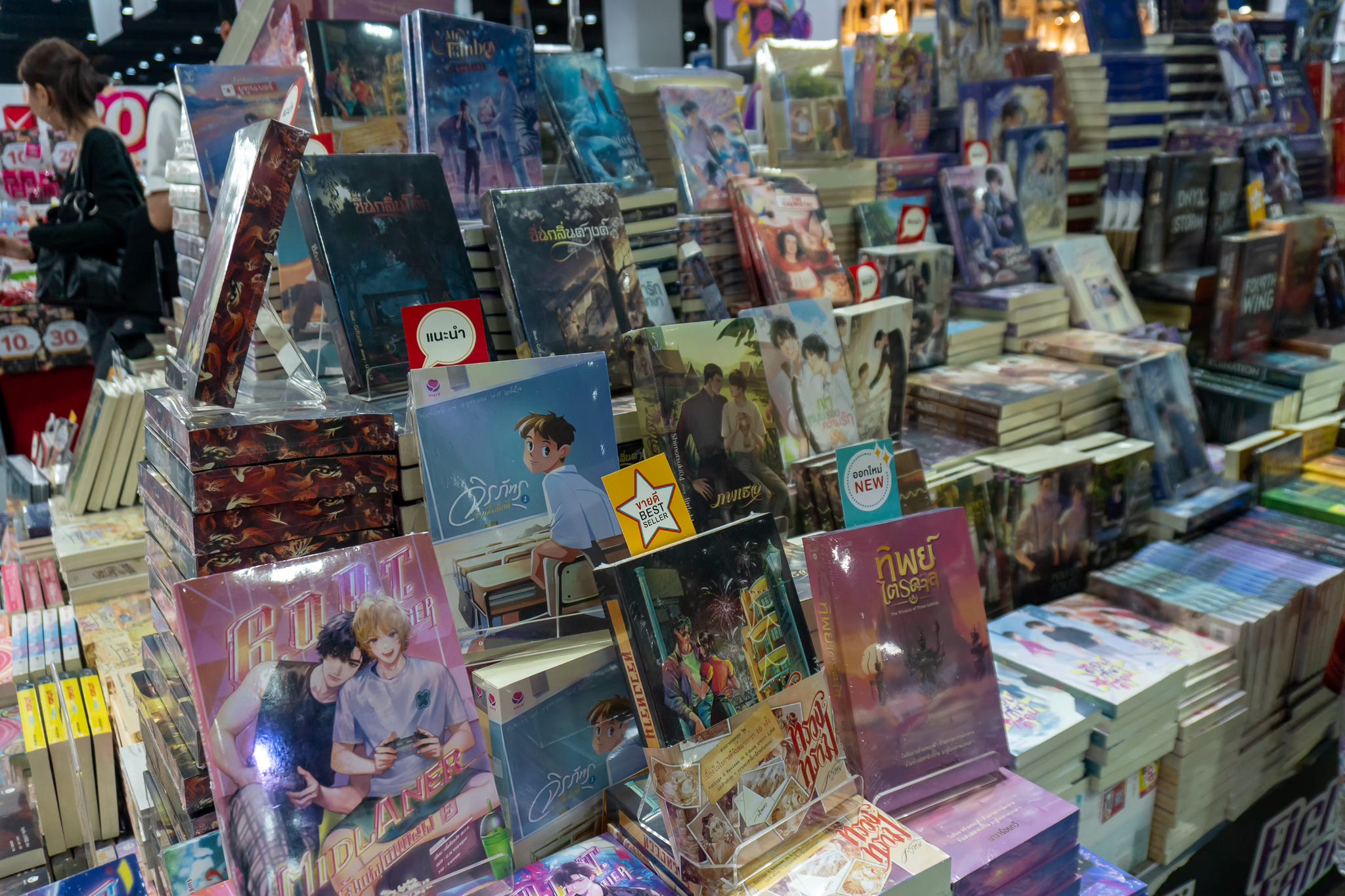
However, with the recent perception from the wider public that the industry of physical publishing has been in decline, the imagery of hundreds of young Gen Zs running and chasing to get their hands on the printed materials seems to prove that perception wrong. For many international audiences, Thailand’s Y-Series boom as appeared on many streaming services globally, seems to be of glossy, finished television dramas that have been widely exported and well received across Asia, Latin America, and Europe. Yet, not so many of them realize that such a polished look of Thai Y-Series originates from this cultural engine of serialized chapters on digital reading platforms like ReadAWrite before entering into the commercial leap onto the printed pages.
This ecosystem creates a testing ground for intellectual property. When a self-published online story can create a massive fandom that generates queues that loop through the convention halls, production studios take notes and take it a step further. To put it simply, a printed story with a readership following removes the massive hit-or-miss studios take when hunting for their next hit, in turn turning localized romance into a cash-grab soft power.


Across Thailand, young readers are returning to paperbacks, not out of nostalgia but as a deliberate choice. For a generation raised on doomscrolling, a physical book offers something a screen cannot: a cover art, first edition signatures or a finite, ownable object. These extras turn a novel they already know into something collectible, and a way of showing which stories and writers they belong to, expressing their identity.
That’s also why the queues matter. A digital story can be deleted, paywalled or buried by the next update, while a signed copy from an author meet-up is a keepsake of a specific day, shared with fellow fans. For Gen Z readers, buying the book is a way of backing the writers they want to see succeed.


What happened at the National Book Expo shows that the printed material culture in Thailand is more than just retail enthusiasm. It marks a turning point, a decentralized, youth-led and centered media pipeline where consumer demand can directly shape mainstream entertainment. While a suitcase full of printed novels leaves the convention center floor, the next wave of Thailand’s global screen hits are probably already cast, funded by the very community that brought it into being.
Be sure to check out the 31st National Book Expo Thailand, hosted at Queen Sirikit National Convention Center, from today till November 1st, 2026.